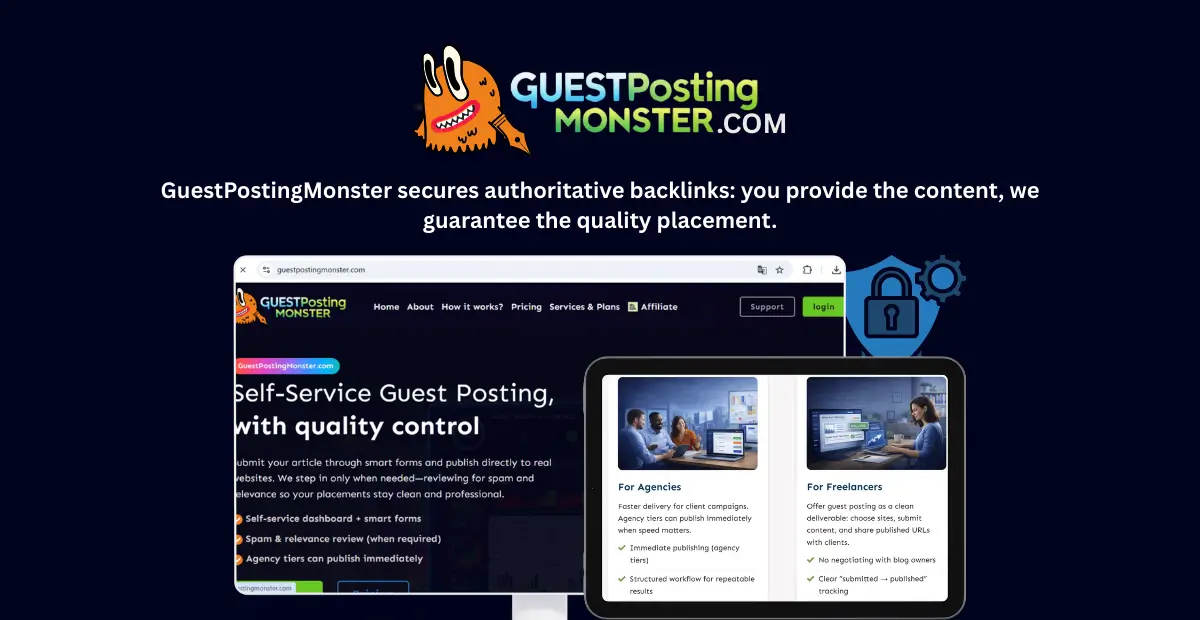

GuestPostingMonster presents a modern conundrum: a platform that brilliantly simplifies securing guest posts, yet simultaneously raises a critical question about content integrity. Does its very efficiency—the ease of finding placements and publishers—unintentionally encourage volume at the expense of genuine value? We’re exploring the delicate balance between accessibility and quality, and what it truly means for your brand’s authority in an algorithm-driven world.
The GuestPostingMonster Paradox: Does Platform Ease Undermine Content Value?
The digital landscape whispers a persistent question: does the streamlined, almost effortless access provided by a platform like GuestPostingMonster inherently devalue the very content it exists to distribute? For marketers and site owners, GuestPostingMonster represents both a powerful gateway and a potential pitfall, a tool where the ease of securing placements can sometimes clash with the enduring need for authoritative, high-quality content. This tension between volume and virtue sits at the heart of modern SEO, forcing us to examine whether convenience comes with a hidden tax on credibility and impact.
Opening Insight: The Double-Edged Sword of Democratized Outreach
Imagine the scene a decade ago. Securing a guest post on a reputable site required painstaking research, personalized cold emails, weeks of negotiation, and often, a hefty budget. The barrier to entry was high, which, while frustrating, acted as a natural filter. Then platforms like GuestPostingMonster entered the stage, transforming a labyrinthine process into a searchable marketplace. With a few clicks, you could browse thousands of sites, see their metrics, and initiate a placement. The democratization was revolutionary.
But with this empowerment came a subtle shift in perspective. The focus risked sliding from “building a relationship with this publisher” to “acquiring a link from that domain.” The human element—the editorial connection, the shared audience interest—can get diluted in a transactional interface. This isn’t a flaw in the platform’s design; it’s a consequence of human nature.
When something becomes easy, we can thoughtlessly pursue more of it, potentially sacrificing the careful craftsmanship that makes content truly valuable. The emotional core here is one of modern professional anxiety: are we leveraging tools for efficiency, or have we become reliant on systems that prioritize speed over substance?
Core Concepts Explained Clearly
At its best, a platform like GuestPostingMonster is a matchmaker, efficiently connecting content creators with publishers who have hungry audiences. It removes the grunt work of discovery and logistics. The danger emerges not from the tool itself, but from how it’s wielded. To understand this, we must dissect the pillars of content value in the context of guest posting.
Value in guest authorship is a composite of three elements: Editorial Relevance (the perfect fit between your content and the host site’s readers), Authoritative Contribution (you bring unique expertise or insight they lack), and Sustainable Gain (the post earns engagement, builds brand affinity, and yes, provides a lasting SEO benefit). A platform that makes access easy tests each of these pillars.
The Volume Trap and the Dilution of Editorial Scrutiny
When publishers are presented with a constant stream of pitches via a centralized platform, editorial fatigue can set in. The decision-making process may shift from “Is this idea exceptional for our audience?” to “Does this meet our basic guidelines and is the site DA high enough?” This creates an opening for mediocre content to slip through. As a writer, knowing you can quickly pitch 50 sites might incentivize you to tailor a generic article 50 times rather than deeply research and craft one perfect pitch for 5 ideal sites. The ease of volume can unconsciously lower the bar for what you consider “good enough.”
The Link-Biased Mindset vs. The Audience-Centric Mindset
This is the core psychological shift. A closed, manual outreach process inherently focuses you on the audience you want to reach. An open platform, with its filters for Domain Authority and traffic, can refocus you on the link you want to acquire. This subtle pivot is everything.
Content conceived as a vehicle for a link is fundamentally different from content conceived as a valuable gift to a new audience. The former leads to commoditized, skimmable posts. The latter leads to insightful, reference-level work that people remember, share, and link to organically. Platforms don’t cause this bias, but their metric-focused interface can exacerbate it if you’re not vigilant.
Strategies, Frameworks, or Actionable Steps for Preserving Quality
You can harness the efficiency of GuestPostingMonster without sacrificing an ounce of quality. It requires a disciplined framework that places human value before transactional ease.
First, Reverse the Process: Audience Before Platform. Do not log into the platform first. Start offline. Identify your ideal reader avatar and the 3-5 core publications they truly trust. Research them deeply. Only then, go to GuestPostingMonster to see if those specific sites are available and to understand their submission guidelines. The platform serves your curated list, not the other way around.
Implement a “Value-First” Pitch Template. When you contact a publisher via the platform, your initial communication must transcend the system’s default messaging.
-
Show Deep Familiarity: Mention a specific recent article they published and add a genuine insight. “I loved your take on X in last week’s post about topic Y. It made me think about Z, which is actually the angle I’d propose…”
-
Lead with Their Gain: Explicitly state what their audience will learn or gain. “Your readers struggling with [common pain point] will walk away with a clear, three-step framework to…”
-
Briefly Credential Yourself: Anchor your expertise in a way that matters to them, not just your job title. “Having implemented this for brands in your niche, like [similar brand], I’ve seen firsthand that the biggest hurdle is…”
Treat the Platform as a Library, Not a Factory. Use its filters not just for metrics, but for true relevance. Filter by niche, then read the actual sites. Look at the comment sections. Assess the tone and depth of existing content. A site with a slightly lower DA but a highly engaged, niche-specific readership is infinitely more valuable than a high-DA site where your topic is a peripheral fit.
The Editorial “Gatekeeper” Checklist
Before submitting any content sourced through a platform, run it through this internal checklist:
-
Exclusivity Test: Is this insight available in the same format on a dozen other sites? If yes, go deeper.
-
Proof-of-Value: Does the draft include unique data, a compelling story, original templates, or an argument that challenges a common assumption?
-
Audience Alignment: Would the host site’s most loyal reader feel this was written specifically for them?
Common Mistakes and How to Avoid Them
Mistake 1: Pitching Before Researching the Publication.
This is the cardinal sin enabled by easy access. You see a good DA score and fire off a generic pitch. Why it hurts: It marks you as a low-effort link seeker, guarantees a rejection (or a placement on a low-quality site that accepts anything), and burns a potential bridge. Correction: As per the framework above, research first. Save sites to a list within GuestPostingMonster, then spend a week reading them before ever hitting “contact.”
Mistake 2: Repurposing Content with Minimal Adaptation.
You have a great blog post, so you tweak the intro and submit it everywhere. Why it hurts: Google’s algorithms are increasingly sophisticated at identifying syndicated or thin, repurposed content. The value of the link is diminished, and you miss the opportunity to create a truly unique asset that stands alone.
Correction: Use your core idea as a foundation, but rewrite it entirely for the new audience. Interview an expert, add new case studies, or change the primary format (e.g., from a how-to list to a detailed narrative case study).
Mistake 3: Prioritizing Link Placement Over Relationship Building.
The transaction ends when the post goes live. Why it hurts: Guest posting is networking. One great relationship with an editor can lead to repeat features, podcast invitations, and joint ventures—value that dwarfs a single link.
Correction: Once published, actively promote the piece as if it’s on your own site. Tag the publisher, engage with comments, and send a thank-you note to the editor mentioning the positive feedback. Turn a transaction into a connection.
Case Studies, Examples, or Real Applications
Case Study 1: The SaaS Company That Chose Depth Over Breadth.
A B2B SaaS company targeting e-commerce brands used GuestPostingMonster to identify 15 top e-commerce blogs. Instead of blasting all 15 with a generic “importance of analytics” pitch, their strategist spent two weeks analyzing each site’s content gaps. For one site focused on scaling, they pitched a data-heavy case study on using their tool to reduce cart abandonment during traffic spikes. For another site focused on founders, they pitched a personal story from their CEO about the single most important metric in the early days. They pursued only these two hyper-tailored pitches. Result: Both were accepted. The posts generated high engagement, direct sign-ups traced from the referrals, and—critically—led to ongoing columnist invitations for both sites. The platform provided the access, but human strategy ensured the quality.
Case Study 2: The Digital Agency That Fell into the Volume Trap.
An agency set a KPI of “20 guest posts per month” for a client. Using GuestPostingMonster, they targeted sites with DA 40+, prioritizing speed. They produced a solid “ultimate guide” and lightly adapted it for each submission. Result: They hit their KPI. 15 posts were published. However, analytics showed near-zero referral traffic, minimal social shares, and the client’s brand search volume didn’t budge. Six months later, several of the posts were de-indexed or removed as the publisher sites cleaned up low-engagement content. The agency had to explain why a “successful” campaign yielded no real business results. The ease of access had directly facilitated a strategy that valued quantity, and the content’s value evaporated post-transaction.
Advanced Insights or Future Predictions
The future of guest posting and platforms like GuestPostingMonster will be shaped by two converging forces: Google’s evolving “Helpful Content” paradigm and audience demand for genuine expertise.
We’re moving rapidly toward an environment where contextual authority is paramount. It won’t be enough to simply have a link from a high-DA site. Google’s systems will get better at assessing whether the author is a legitimate expert on the topic and whether the content is the best available answer for that specific query on that specific site. This means a generic, lightly-researched post from a non-expert, even on a great site, will carry less weight—and could even harm the site’s credibility.
Smart platforms will likely respond by developing more sophisticated vetting layers, perhaps offering “expert-verified” publisher networks or deeper integration with author portfolios and semantic analysis of content quality. For users, the winning strategy will be to use these platforms not as link factories, but as curated networks for showcasing deep topical authority. Your goal shifts from “get a link” to “become a recognized contributor to this niche’s editorial ecosystem.” The platforms that facilitate that will thrive, while those that remain purely transactional will see their output diminish in SEO value.
The Human Factor: Your Ultimate Differentiator
The value of content created through GuestPostingMonster—or any similar platform—is not determined by the tool, but by the hands and mind that wield it. The ease of access is a magnificent gift of efficiency, but it is not an absolution from the hard work of insight, empathy, and craftsmanship. The true risk lies in allowing the psychology of convenience to lower your standards, to make the link the goal instead of the byproduct of genuine contribution.
View these platforms as powerful amplifiers. An amplifier makes both a beautiful symphony and painful feedback louder. Your job is to ensure you’re feeding it a symphony. The moment you mistake the amplifier for the instrument itself, you’ve lost. Prioritize the human in the process: the human reader you serve, the human editor you collaborate with, and the human expertise you bring to the table. Do that, and the platform becomes what it was always meant to be—a bridge to better audiences, not a shortcut that leads nowhere.