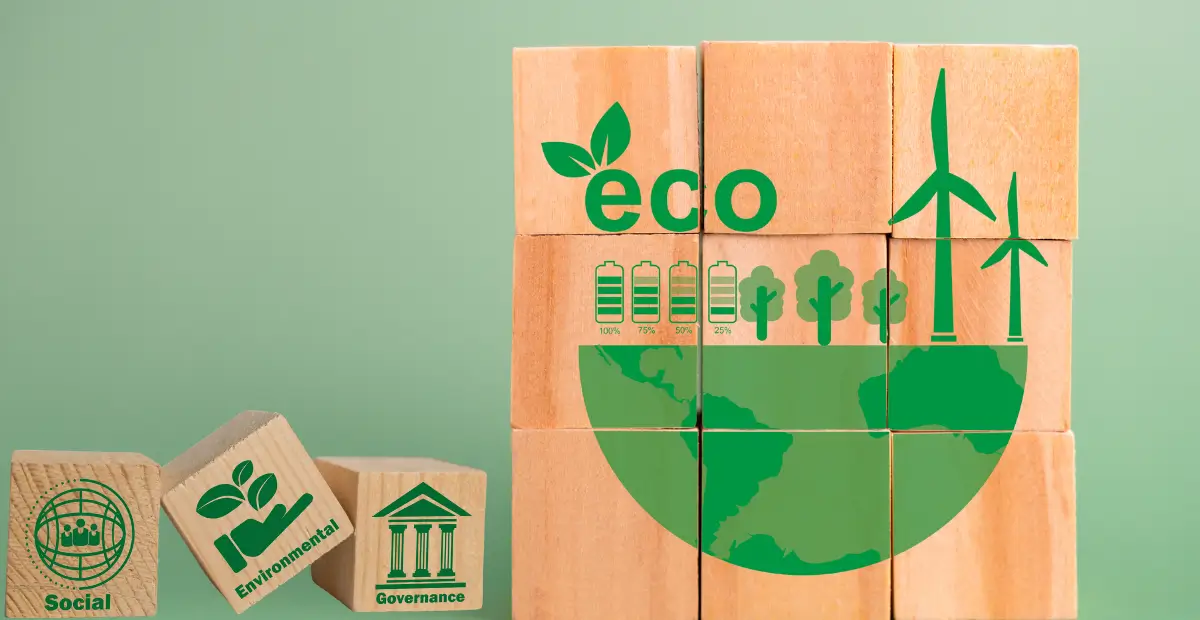
H1: Transforming Sustainability from a Buzzword into Your Core Competitive Advantage in 2026 For forward-thinking business leaders, the question is no longer *if* to adopt sustainable practices, but *how* to leverage them for definitive market leadership. In 2026, **sustainability is not a trend**; it’s the fundamental lens through which resilience, innovation, and customer loyalty are built. To turn this imperative into a tangible **competitive advantage**, companies must move beyond carbon-offsetting and recycled packaging to embed genuine, systemic change into their operational DNA. This strategic integration is what will separate the authentic leaders from the participants in the coming years, unlocking unprecedented value and future-proofing your business. ## **H2: The End of "Greenwashing": Why Sustainability is Now a Survival Strategy** Remember when "eco-friendly" was a niche marketing claim? That era is conclusively over. We’re witnessing a profound shift from sustainability as a reputational accessory to a non-negotiable component of business viability. This isn't driven by idealism alone; it's powered by hard economic realities. Climate volatility disrupts supply chains. Resource scarcity inflates costs. A new generation of employees chooses employers based on purpose. Investors now rigorously screen for Environmental, Social, and Governance (ESG) performance, tying it directly to risk assessment and valuation. The human story here is about trust and consequence. Consumers and B2B buyers alike are savvier, armed with tools to scrutinize a company’s entire value chain. They feel the heat of a warming planet and see the social inequities laid bare. Their purchasing decisions have become a form of advocacy. A company’s sustainability narrative is no longer just a story it tells; it’s the story its data, its partners, and its impact tell about it. The emotional connection is rooted in transparency and shared responsibility—fail here, and you breach a deeper, more permanent trust. ## **H2: Core Concepts: Building an Advantage on Authentic Sustainable Foundations** To build a real advantage, we must first dismantle vague notions and build on precise, actionable concepts. The competitive edge doesn't come from "being green." It comes from strategically aligning sustainability with business growth, innovation, and risk mitigation. ### **H3: 2.1: From Linear to Circular: The Systems-Thinking Imperative** The old "take-make-dispose" linear model is inherently wasteful and risky. The circular economy isn't just about recycling; it's a systemic redesign. It asks: How can we design products for longevity, repairability, and eventual disassembly? How can waste be eliminated by becoming an input for another process? **Example:** Consider a premium outdoor apparel company. The traditional model sells a jacket. The circular model might *lease* a high-performance jacket as a service, maintain it, refurbish it, and eventually recycle its technical fabrics into a new product line. The competitive advantages? Recurring revenue, direct customer relationship beyond a single transaction, locked-in loyalty, reduced dependency on virgin raw materials, and a powerful brand story of stewardship. The customer buys performance and ethos, not just a product. ### **H3: 2.2: The Triple Bottom Line as a Strategic Framework** The framework of People, Planet, and Profit (the Triple Bottom Line) is your strategic map. The goal is not to sacrifice profit for planet, but to recognize that long-term profitability is dependent on the health of the other two. * **Planet (Environmental Stewardship):** This is your operational resilience lever. It encompasses carbon neutrality goals, water stewardship, biodiversity protection, and renewable energy adoption. Advantage comes from cost savings (energy efficiency), securing license to operate, and insulating against regulatory shocks.* **People (Social Equity):** This is your talent and innovation lever. It spans fair wages, safe working conditions, diversity in leadership, and community engagement. Advantage comes from attracting top talent, boosting employee productivity and retention, fostering inclusive innovation, and building brand affinity.* **Profit (Economic Viability):** This is the outcome of getting the first two right. It’s about creating shared value for all stakeholders—shareholders, employees, customers, and communities. Profit is reinvested to strengthen the "People" and "Planet" pillars, creating a virtuous cycle. ## **H2: Actionable Strategies to Operationalize Your Sustainable Advantage in 2026**This is where strategy meets the ground. To build a defensible advantage, you must integrate these actions deeply.**1. Conduct a Materiality Assessment with Stakeholder Input:** Don't guess what's important. Systematically engage investors, customers, employees, and community partners to identify the environmental and social issues most material to *your business* and *their expectations*. This focus prevents resource dispersion and aligns your efforts with what truly drives risk and opportunity for your specific context. **2. Embed Sustainability in Product Design & Innovation (DfS):** Mandate "Design for Sustainability" (DfS) principles in your R&D and product development cycles. This includes using life-cycle assessment (LCA) tools to measure impact from cradle-to-grave, selecting low-impact materials, designing for energy efficiency in use, and planning for end-of-life recovery. This makes sustainability an innovation catalyst, not a compliance constraint. **3. Transform Your Supply Chain into a Value Chain:** Your sustainability is only as strong as your weakest supplier link. Move from auditing to partnering. Co-invest in cleaner technologies with key suppliers, share data transparently, and collaborate on solving mutual challenges like packaging reduction or logistics optimization. This builds a more resilient, agile, and innovative ecosystem that competitors cannot easily replicate. **4. Master Radical Transparency and Data Storytelling:** In 2026, claims require proof. Implement robust systems to collect, verify, and communicate your impact data. Publish detailed sustainability reports aligned with global standards (like GRI or SASB). Use interactive digital platforms to tell the story behind the data—show the faces of your supplier partners, the landscapes you’re helping restore, the engineering behind your product’s lower footprint. Transparency becomes a compelling narrative asset. **5. Align Executive Compensation with Sustainability KPIs:** What gets measured and rewarded gets done. Link a significant portion of C-suite and senior management bonuses to achieving specific, time-bound sustainability targets (e.g., Scope 1 & 2 emissions reduction, supplier diversity goals, employee wellbeing metrics). This irrevocably moves sustainability from a CSR department initiative to a core business driver. ## **H2: Common Strategic Mistakes That Dilute Your Competitive Edge** **Mistake 1: The "One-Off Campaign" Approach.** Treating sustainability as a marketing campaign (e.g., a single "green" product line) while core business remains unchanged. This is easily exposed as greenwashing, eroding trust and inviting reputational backlash that can negate any short-term gain. **Correction:** Ensure every public-facing initiative is a visible part of a broader, documented corporate strategy. Communicate the "why" and the "how" it fits into your larger transformation. **Mistake 2: Focusing Solely on Carbon, Ignoring Social "S".** An obsessive focus on carbon footprint while ignoring worker welfare, diversity, or community impact creates blind spots. It fails to address the full spectrum of stakeholder concerns and leaves you vulnerable to social media crises or talent drain. **Correction:** Use the Triple Bottom Line as a balanced scorecard. Your materiality assessment should highlight key social issues you must address with the same rigor as environmental ones. **Mistake 3: Keeping Sustainability Siloed.** When the sustainability team operates in isolation from finance, procurement, or product development, it becomes a cheerleader without authority. Initiatives are slow, underfunded, and seen as "extra" work. **Correction:** Embed sustainability representatives or mandates within every key business unit. Make the Head of Sustainability a direct report to the CEO, with cross-functional influence. **Mistake 4: Over-Reliance on Offsetting.** Purchasing carbon credits to claim "net-zero" without aggressive, verifiable reductions in your own operational and value chain emissions (Scope 1, 2, and 3). This is increasingly seen as a hollow accounting trick, especially if the offsets are of questionable quality. **Correction:** Treat offsets as a last resort for truly unavoidable emissions, not a first solution. Prioritize "insetting"—making reductions within your own value chain—and be transparent about your reduction roadmap. ## **H2: Real-World Blueprints: Companies Forging a Sustainable Advantage** **Case Study 1: Patagonia’s "Circular Economy" in Action.** The outdoor giant has long built its brand on activism. Its competitive advantage now is locked in through initiatives like **Worn Wear**. This isn't just a repair service; it's a dedicated e-commerce platform for selling expertly repaired used Patagonia gear. It directly attacks fast fashion, deepens customer loyalty, and captures value from products already in existence. Their **"Don't Buy This Jacket"** campaign and consistent donation of 1% of sales to environmental causes aren't ads; they are proof points of a belief system, attracting a customer base that sees purchases as an alignment of values. The advantage? Pricing power, fanatical loyalty, and a moat built on authenticity that no newcomer can easily copy. **Case Study 2: Ørsted’s Core Business Transformation.** This Danish company executed one of the most dramatic corporate pivots. It transformed from **DONG Energy (Danish Oil and Natural Gas)**, a fossil-fuel-heavy utility, into **Ørsted**, a global leader in offshore wind energy. They didn't just add a wind farm; they strategically divested fossil assets and bet the company's future on renewables. By 2026, they aim to be carbon-neutral in their energy generation and operations. The competitive advantage? First-mover scale in offshore wind technology, alignment with global decarbonization policies, attractiveness to green capital, and a brand synonymous with the energy transition. They turned an existential risk (the decline of fossil fuels) into their core strength.**Case Study 3: IKEA’s Democratic Sustainability.** IKEA’s advantage lies in making sustainable living accessible at scale. Their **"People & Planet Positive"** strategy includes sourcing 100% renewable energy for its operations, designing products for circularity (like the KUNGSBACKA kitchen fronts made from recycled PET bottles), and launching furniture buy-back and resale programs in stores worldwide. By baking sustainability into affordable, desirable design and convenient customer programs, they normalize it for millions. Their advantage is systemic: supply chain control, massive consumer touchpoints, and the ability to shift market expectations through volume and accessibility.## **H2: The 2026 Horizon: Advanced Insights and Imperatives**Looking ahead, the sustainability advantage will be dictated by data, regulation, and convergence.**1. The Digital Carbon Footprint Comes to the Fore.** Scope 3 emissions reporting will become standard, forcing companies to account for the carbon cost of their cloud data storage, digital advertising spends, and software use. Tech-driven "green analytics" platforms will become critical for measuring and optimizing this.**2. Regulatory Catalysis, Not Constraint.** Legislation like the EU’s Corporate Sustainability Reporting Directive (CSRD) and potential border carbon adjustments will create a hard floor. The advantage will go to companies who see these regulations not as red tape but as a catalyst for innovation and a market-shaping force that levels the playing field *in their favor* if they are ahead. **3. Convergence of Climate Tech and AI.** AI will optimize energy grids, predict supply chain disruptions from climate events, and accelerate material science for sustainable alternatives. The companies that strategically adopt these technologies will achieve efficiency and innovation leaps competitors cannot match.**4. Biodiversity as the New Carbon.** Nature-related financial disclosures (like the TNFD framework) will gain prominence. Companies will need to account for their impact and dependency on ecosystems. Early movers in regenerative agriculture, water stewardship, and habitat protection will secure resource access and license to operate.**Prepare for this by** appointing a Chief Sustainability or Transformation Officer with real power, investing in integrated ESG data platforms now, and engaging proactively with emerging regulatory frameworks to help shape them.## **H2: Your Unshakeable Foundation for the Future**The trajectory is clear. In 2026, market leaders will be those for whom sustainability is the operating system, not an app running in the background. The competitive advantage you seek won’t be found in a slick marketing slogan, but in the gritty, unglamorous work of redesigning supply chains, incentivizing the right behaviors, and telling the unvarnished truth about your journey. It’s an advantage built on resilience that attracts the best partners, the most loyal customers, and the capital aligned with the future. Sustainability is not a trend you follow; it’s the strategic lens through which you build a business that endures and leads. Start building that foundation today, not because you have to, but because it’s the only way to win tomorrow.
Sustainability is Not a Trend: How to Turn It into a Real Competitive Advantage in 2026